
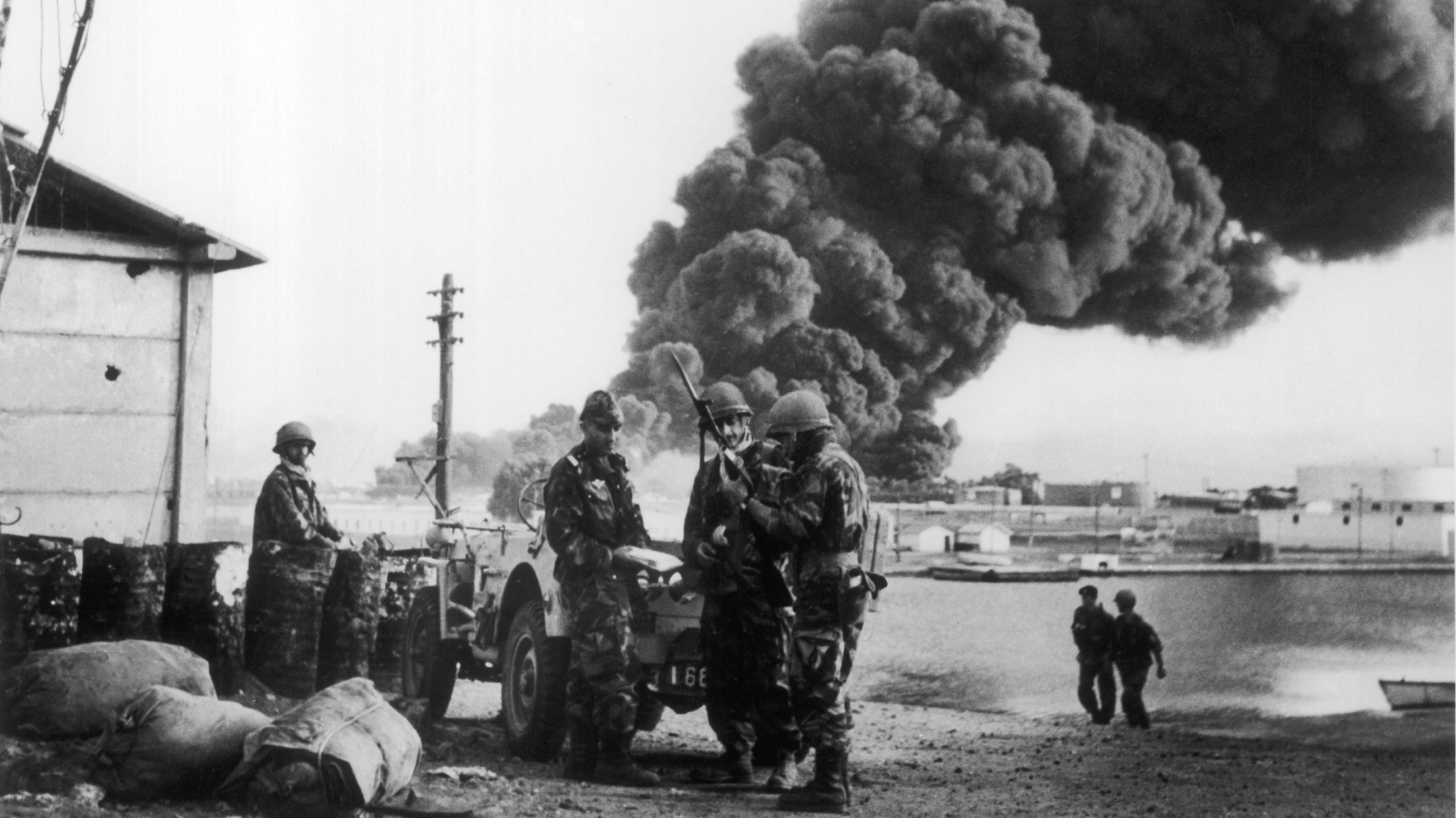
The 1956 Suez Crisis, also known as the Arab-Israeli Second War, was a pivotal event in Middle Eastern history that dramatically reshaped regional and global politics. Rooted in complex geopolitical tensions, colonial legacies, and nationalistic movements, the crisis involved multiple nations with competing interests. It was marked by military confrontations, diplomatic struggles, and significant shifts in international influence. This article explores the background, key players, and repercussions of the 1956 Suez Crisis, providing a comprehensive understanding of its significance in the modern history of the Middle East.
Background and Causes of the 1956 Suez Crisis
The origins of the 1956 Suez Crisis are deeply embedded in the geopolitical and colonial history of the Middle East. Following World War II, the decline of European colonial powers like Britain and France created a power vacuum in the region, leading to rising Arab nationalism and demands for independence. Egypt, under British influence since the 19th century, sought to assert its sovereignty, particularly over the Suez Canal, a vital maritime route connecting Europe and Asia. The canal had been under British and French control since the early 20th century, symbolizing colonial dominance and strategic importance.
Economic factors also played a role in fueling tensions. Egypt faced economic difficulties and sought to modernize its infrastructure and military capabilities. The nationalization of the Suez Canal was seen as a bold move to assert control over national resources and reduce dependence on colonial powers. Additionally, Cold War dynamics exacerbated regional tensions, as both the United States and the Soviet Union sought influence in the Middle East. The United States, under President Dwight D. Eisenhower, was cautious about colonial entrenchment, while the Soviet Union supported Arab nationalist movements, adding a layer of superpower rivalry to regional conflicts.
The rise of Egyptian President Gamal Abdel Nasser was a critical catalyst. Nasser’s pan-Arabist ideology aimed at unifying Arab nations and resisting Western influence. His decision to nationalize the Suez Canal in July 1956 was a direct challenge to Britain and France, who relied heavily on the canal for their imperial interests. This move was motivated by the need for funds to finance the construction of the Aswan High Dam and to demonstrate Egyptian independence. The nationalization incited fears among Western powers of losing strategic control over this crucial waterway, setting the stage for military and diplomatic responses.
The broader regional context involved ongoing conflicts between Israel and its Arab neighbors, with Egypt playing a central role. The Arab states viewed Nasser’s nationalist policies as a rallying point for anti-colonial efforts and resistance against Israel. Tensions escalated as Egypt supported Palestinian guerrilla activities against Israel, further complicating the diplomatic landscape. The combination of colonial legacies, economic ambitions, Cold War rivalries, and regional conflicts created a volatile environment primed for confrontation.
In summary, the causes of the 1956 Suez Crisis were multifaceted, rooted in colonial history, regional nationalism, Cold War tensions, and economic ambitions. The nationalization of the Suez Canal by Nasser was the immediate trigger, but underlying issues related to sovereignty, control of strategic assets, and regional power dynamics fueled the crisis. These complex factors set the stage for a confrontation that would have far-reaching consequences for the Middle East and the world.
Key Players and Nations Involved in the Conflict
The 1956 Suez Crisis involved several key nations, each driven by distinct strategic, political, and economic interests. Egypt, led by President Gamal Abdel Nasser, was at the center of the conflict, seeking to assert sovereignty over the Suez Canal and promote Arab nationalism. Nasser’s policies aimed at unifying Arab nations and resisting Western influence, making Egypt a focal point of regional power dynamics. His decision to nationalize the canal was both a symbol of independence and a strategic move to fund national development projects.
Britain and France were the primary colonial powers with vested interests in maintaining control over the Suez Canal. Historically, they had managed the waterway through joint ownership and control, but their influence waned as Nasser’s nationalist movement gained momentum. Britain, still a major global power, sought to protect its imperial interests and maintain access to the canal for its maritime trade routes. France, concerned about its interests in North Africa and the broader region, also aimed to preserve its influence and counterbalance Egyptian nationalism.
Israel emerged as a significant player due to its strategic security concerns. The nascent state faced ongoing threats from neighboring Arab nations, including Egypt, which supported Palestinian guerrilla groups attacking Israeli territory. Israel saw the crisis as an opportunity to weaken Egypt’s military strength and secure its southern borders. The Israeli government, led by Prime Minister David Ben-Gurion, coordinated with Britain and France to justify military action against Egypt, framing it as a preemptive strike to ensure its national security.
The United States and the Soviet Union, as superpowers engaged in Cold War rivalry, played crucial but indirect roles. The U.S., under President Eisenhower, was wary of colonial entrenchment and sought to limit Western military interventions in the region. The Soviet Union, meanwhile, supported Arab nationalist movements and condemned Western and Israeli actions, viewing the crisis as an opportunity to extend influence in the Middle East. Their diplomatic maneuvers and public statements influenced the international response and the eventual UN intervention.
International organizations, notably the United Nations, also played a mediating role during the crisis. The UN sought to de-escalate the conflict through diplomatic efforts and peacekeeping initiatives. The crisis highlighted the decline of colonial powers and the rise of new geopolitical alliances, with regional and global actors vying for influence. The involvement of multiple nations underscored the complexity of the crisis, which was shaped by colonial legacies, Cold War tensions, and regional security concerns.
In essence, the key players in the 1956 Suez Crisis included Egypt, Britain, France, Israel, the United States, and the Soviet Union. Each nation pursued its strategic interests, often clashing with others’ objectives, which transformed the crisis into a multifaceted international conflict with regional and global implications.
The Role of Egyptian President Gamal Abdel Nasser
Gamal Abdel Nasser was the central figure in the 1956 Suez Crisis, embodying the rise of Arab nationalism and anti-colonial resistance. As Egypt’s leader, Nasser sought to modernize the country, assert its sovereignty, and promote pan-Arab unity. His leadership was characterized by bold nationalist policies that challenged Western dominance and aimed to mobilize Arab populations against colonial and imperial influences. Nasser’s vision extended beyond Egypt, aspiring to unify Arab nations under a single political and ideological banner.
Nasser’s decision to nationalize the Suez Canal in July 1956 was a defining moment of his presidency. The move was motivated by multiple factors: funding the construction of the Aswan High Dam, reducing dependence on foreign aid, and asserting Egypt’s control over its strategic assets. The canal was a symbol of colonial control, and its nationalization was a direct challenge to Britain and France, who viewed it as a threat to their economic and strategic interests. Nasser framed the move as an act of sovereignty and anti-imperialism, rallying public support across Egypt and the Arab world.
Nasser’s leadership during the crisis showcased his diplomatic and political skills. He mobilized Egyptian military and popular support, presenting himself as a defender of Arab independence. His defiance against Western powers garnered admiration among many Arabs and non-aligned nations, positioning Egypt as a leader in the anti-colonial movement. Nasser also skillfully navigated Cold War dynamics, receiving rhetorical support from the Soviet Union while maintaining a non-aligned stance in terms of military alliances.
However, Nasser’s actions also faced significant opposition. Britain, France, and Israel formed a secret alliance to counter his moves, leading to a military intervention. Nasser responded by rallying Arab and global support, appealing to the United Nations and the international community for legitimacy. His leadership was tested during the military conflict, but he maintained his stance, refusing to back down despite mounting pressure and military setbacks. His resolve cemented his reputation as a symbol of Arab resistance and independence.
The aftermath of the crisis elevated Nasser’s status as a regional leader. Despite diplomatic setbacks, he emerged as a hero in many Arab countries, symbolizing resistance against colonialism and Western intervention. His success in standing firm against Britain, France, and Israel bolstered his influence and paved the way for future nationalist movements in the Middle East. Nasser’s role in the Suez Crisis remains a defining chapter in his leadership and in the history of Arab nationalism.
Nationalization of the Suez Canal and Its Impact
The nationalization of the Suez Canal by Egyptian President Gamal Abdel Nasser in July 1956 was a watershed moment that reshaped regional and international affairs. Historically, the canal had been controlled by the Suez Canal Company, a joint British-French enterprise, symbolizing Western dominance over vital global trade routes. Nasser’s decision to nationalize the canal was driven by the need for funds to finance the Aswan High Dam and a desire to assert Egypt’s independence from colonial powers. This move challenged the existing colonial and economic order and ignited a diplomatic and military crisis.
The immediate impact of nationalization was a sharp deterioration in relations between Egypt and Britain, France, and Israel. The Western powers viewed the move as a threat to their strategic interests, particularly control over the canal, which was essential for maritime trade and military movement between Europe and Asia. The nationalization also symbolized a broader wave of anti-colonial and anti-imperialist sentiment sweeping the Arab world and beyond, inspiring other nations to pursue sovereignty over their resources and strategic assets.
Economically, the nationalization aimed to generate revenue for Egypt’s development projects, notably the construction of the Aswan High Dam. This was seen as a move toward economic independence and self-sufficiency. However, the move also caused uncertainty in global markets and disrupted international shipping routes, prompting fears of broader